
But Bedrick’s influence extends far beyond her own studio walls. She is a co-founder of Desert Open Studios, the annual event that now supports more than 150 artists, and she has been instrumental in shaping the visibility of The Perez Art District, helping establish its monthly art walks as well as the Modernism Week Art District Tour.
This year, Bedrick co-created the Truck Stop Art Fair, a pop-up in which U-Haul moving trucks were transformed into individual exhibition booths, bringing contemporary art to the people in downtown Palm Springs. In many ways, she has helped define the cultural rhythm of the desert’s contemporary art scene.
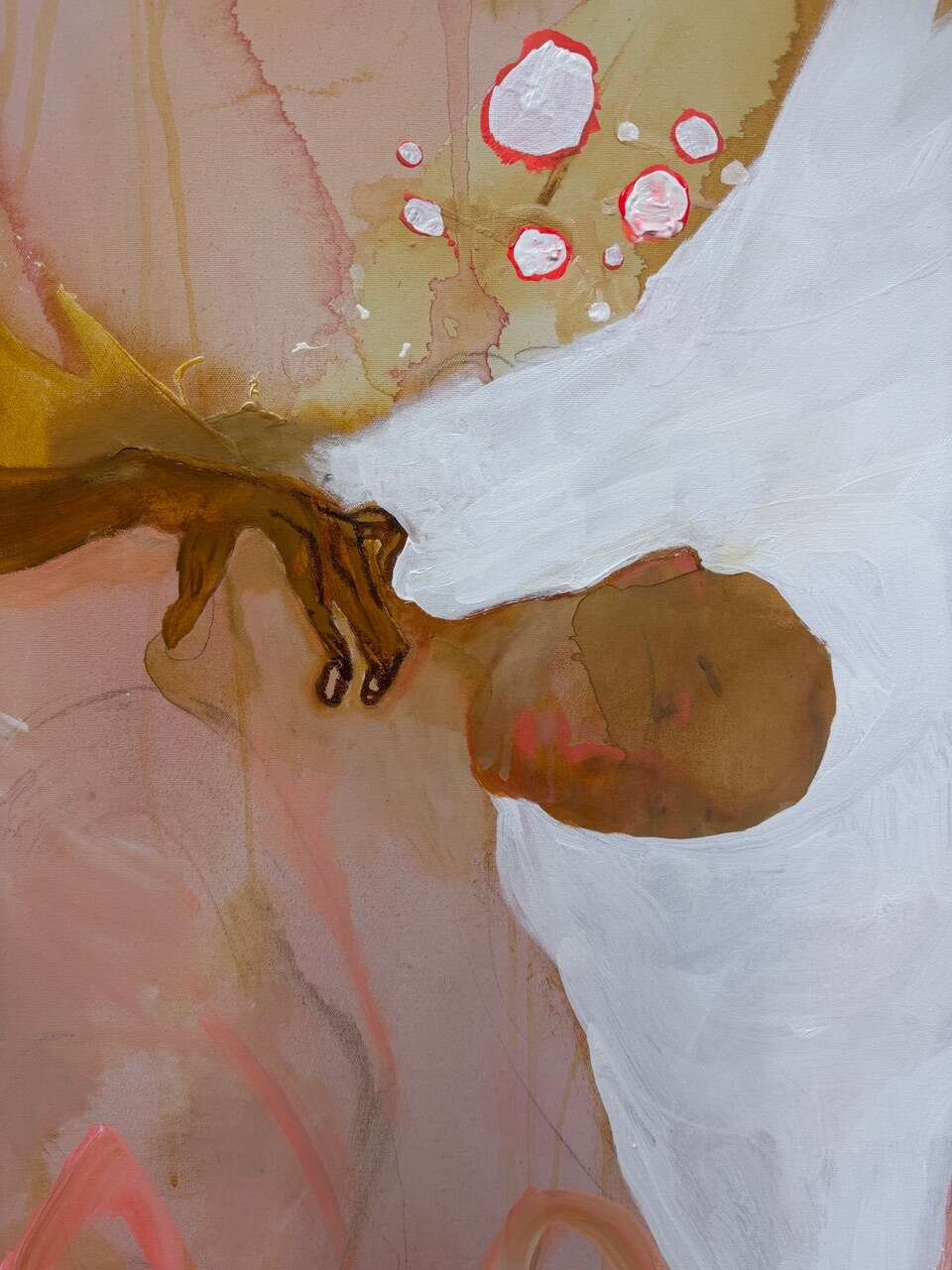
At the center of her work, across both painting and sculpture, is a recurring motif: the hand.
“Across my work in painting and sculpture, hands recur as a central symbol, reaching, pulling, protecting, claiming, they are how the world touches us and how we touch each other.”
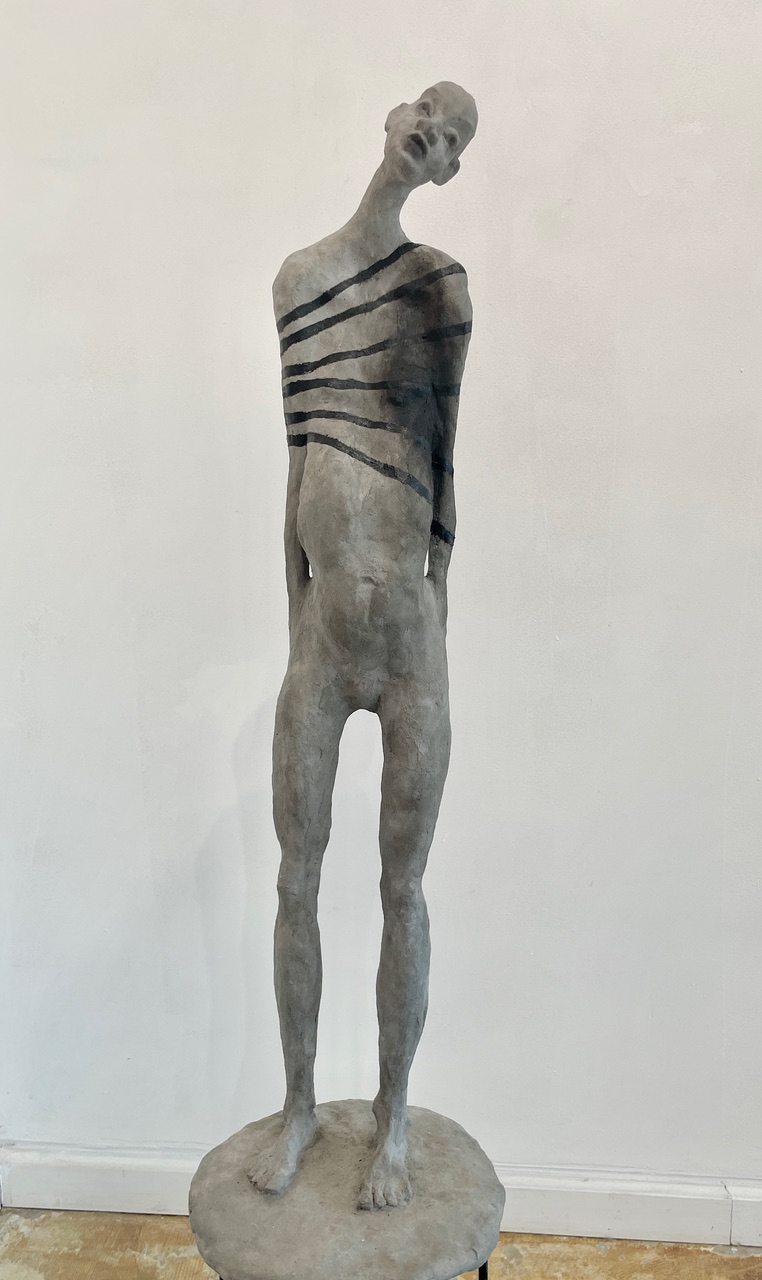
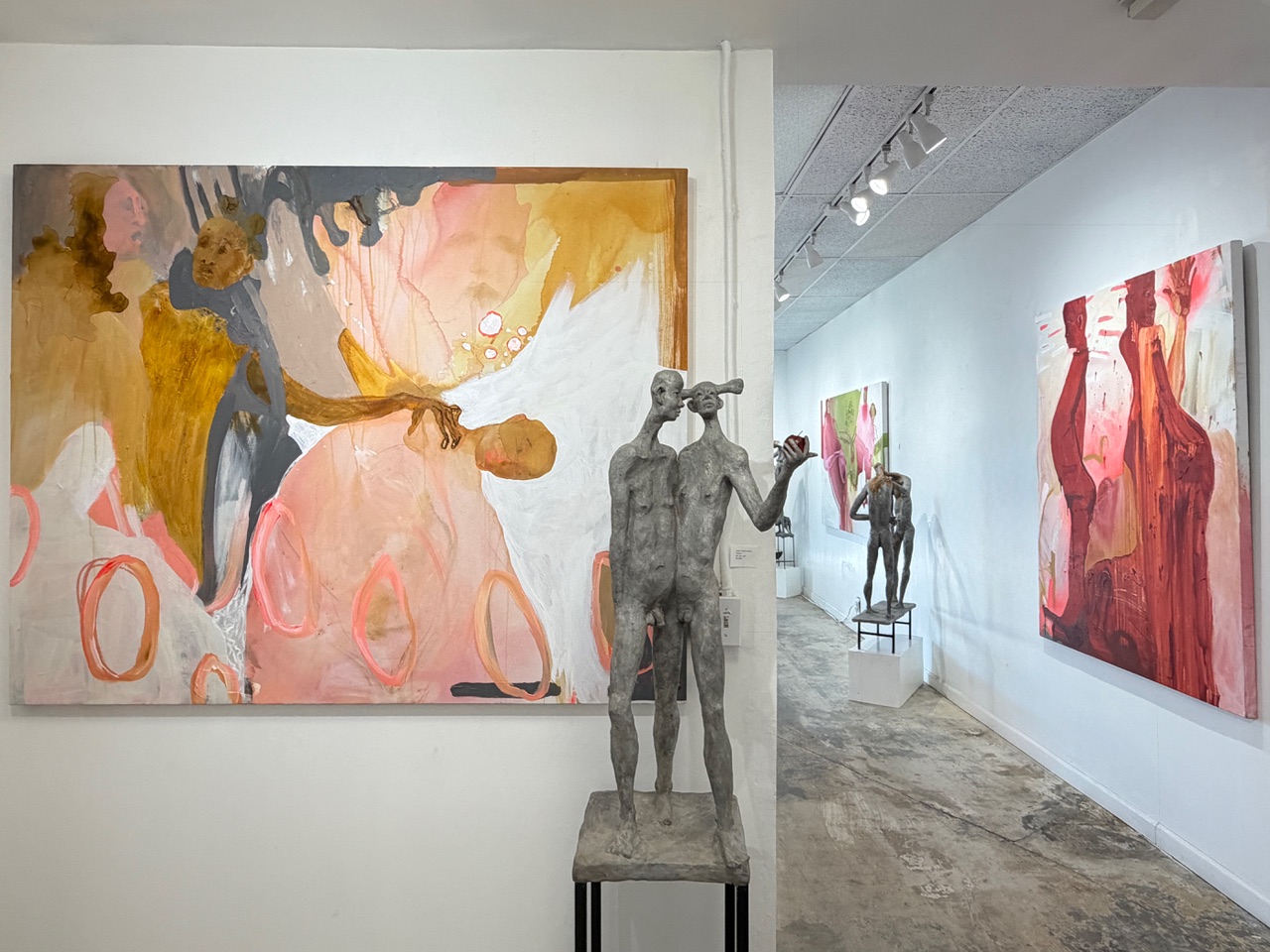
That idea manifests most viscerally in her cement figurative sculptures. Elongated bodies lean, twist, and engage in quiet but charged exchanges. Their painted surfaces heighten emotional tension, while their gestures sometimes tender, sometimes confrontational, seem to extend beyond the object itself and into the viewer’s own body.
“My cement figurative sculptures exist in psychological exchange with one another and with the viewer,” she said. “Each carries a felt intensity in their body that the viewer feels in their own.”
In The Observer, one figure stands bound by painted lines, immobilized and most strikingly without hands. In contrast, Holding Onto That Feeling presents a figure overwhelmed by emotion, pressing her hands into her chest as if to contain something too expansive to hold. There’s a raw immediacy here: joy, restraint, and vulnerability collapsing into a single physical moment.

Narrative tension continues in Look, I’m Gonna Eat It, her reimagining of Adam and Eve. The figures are fused together, sharing limbs that ultimately belong to Eve. She holds the agency; he hesitates. It’s a subtle but powerful inversion, one that speaks to autonomy, choice, and the shifting dynamics of power.
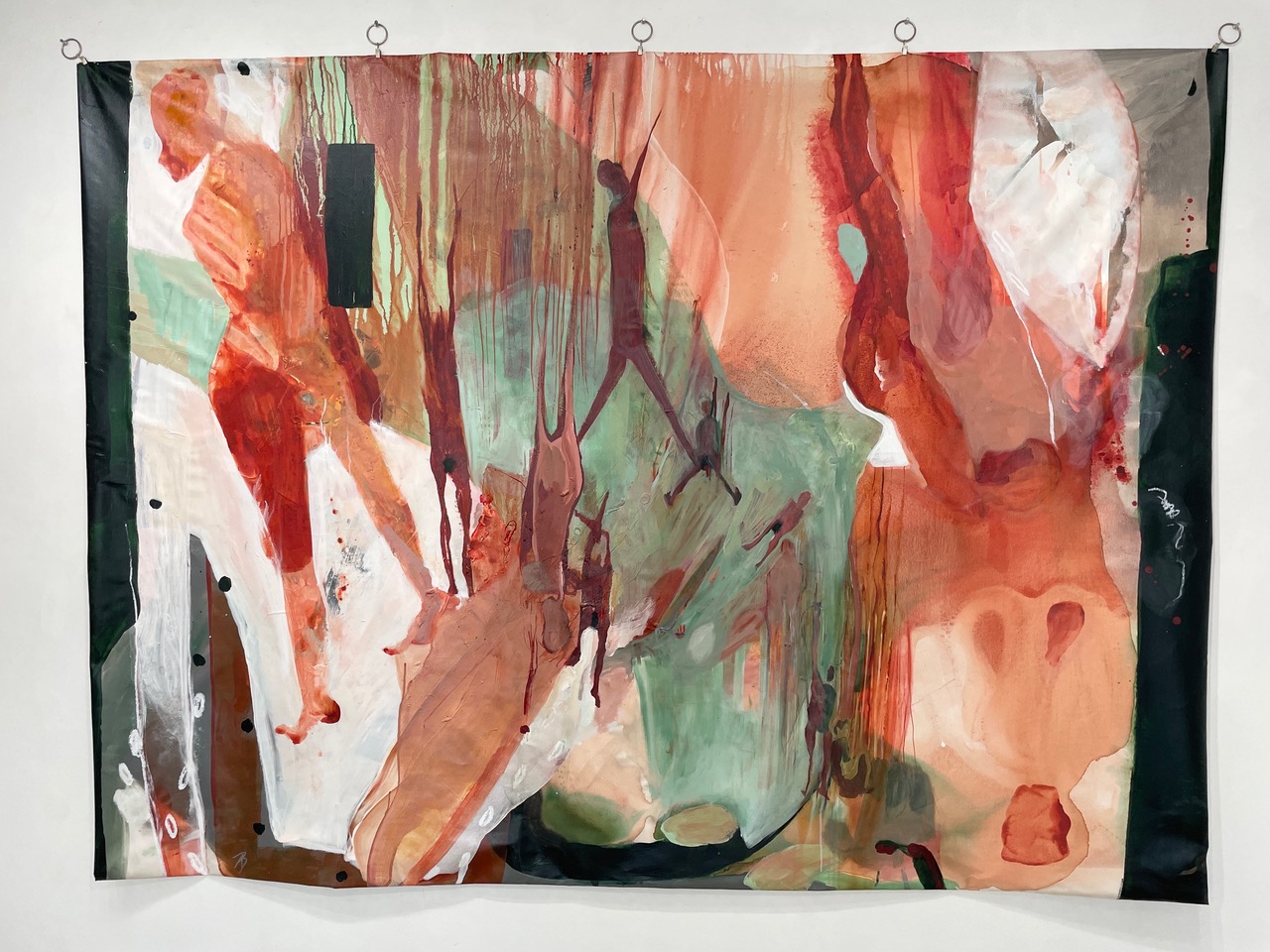
Her paintings, equally commanding, hover between figuration and abstraction. Large in scale, they envelop the viewer, insisting not just on observation but on physical presence.
“My paintings navigate inner and outer experience,” Bedrick explained. “Figures emerge and dissolve at the edge of abstraction, their instability echoed in fractured spaces.”
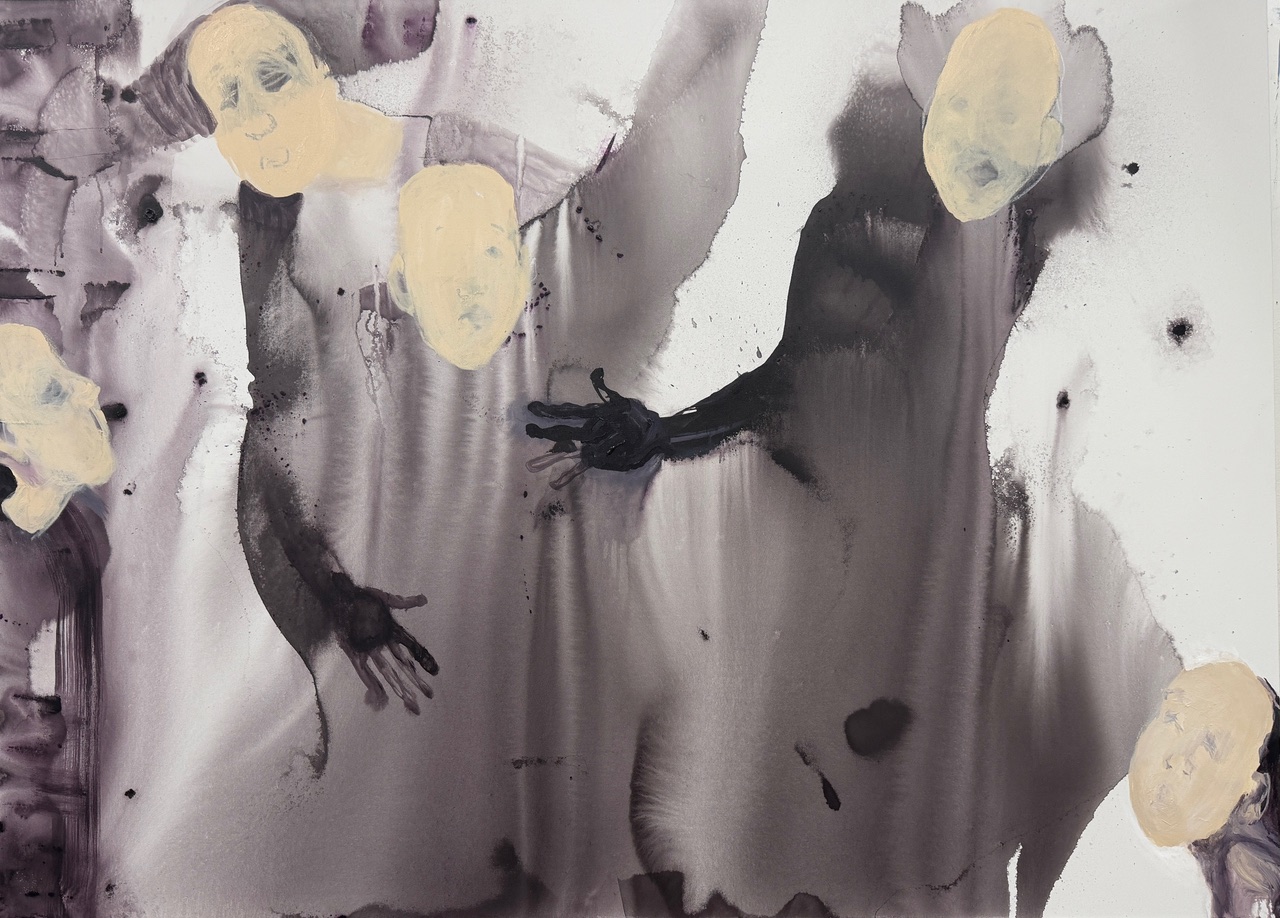
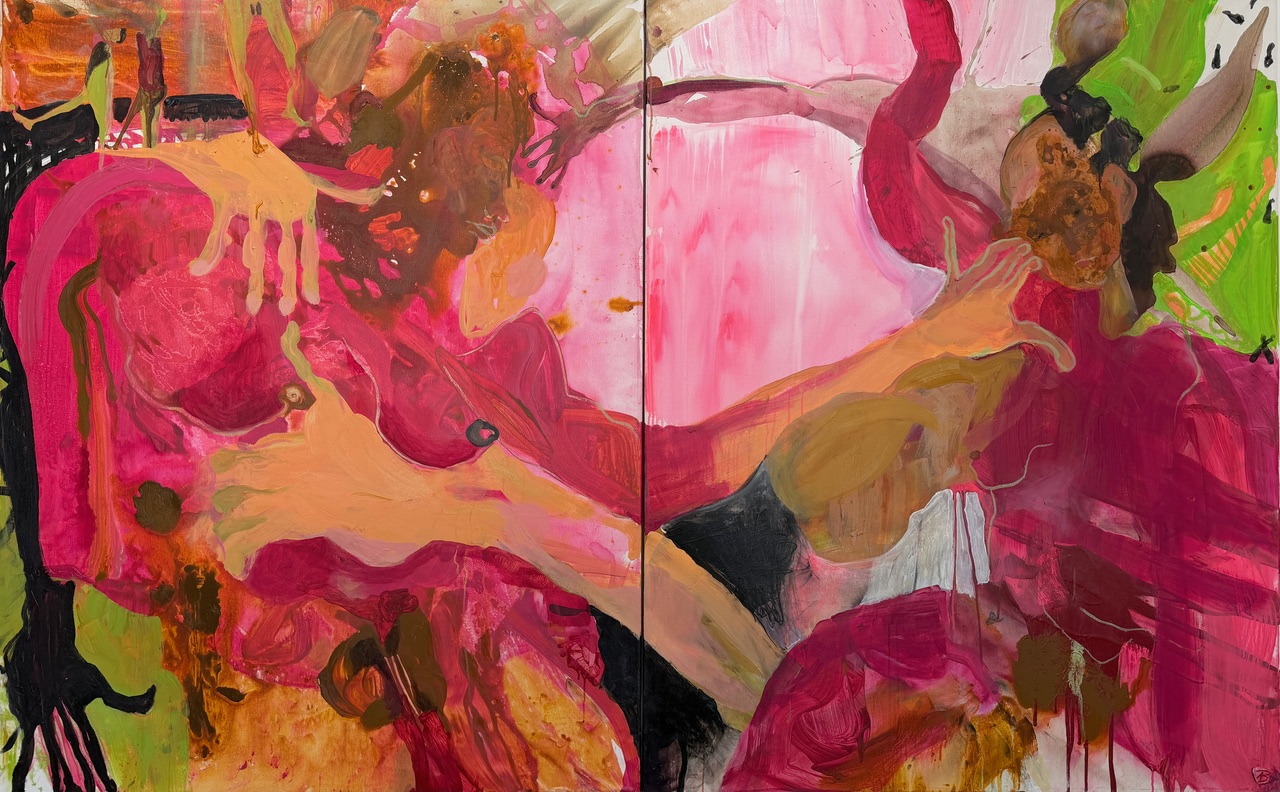
In works like The Imprint of People, Bedrick examines how others remain with us long after they’ve gone. In The Hunger four figures surround a hunched central form, one offering comfort with divided attention, one witnessing from a distance, and a ghost face emerging above as though summoned. It is about the way we circle one another in crisis, present, imperfect, divided, trying. While in She Was Me, a monumental diptych, a woman reaches back toward her younger self, her body overtaken by the hands of others, memory made physical.
Her series, Fall of Freedom: Women’s Testimonies, confronts the erosion of rights and bodily autonomy with unflinching clarity. Across five paintings, Unhand Me, Woman on the Run, Woman in Pieces, Woman Becoming Warrior, and Can You Hear the People Sing, Bedrick traces a progression from resistance to fragmentation to collective voice.
“They are not hopeful paintings,” she said plainly. “They are honest ones.”
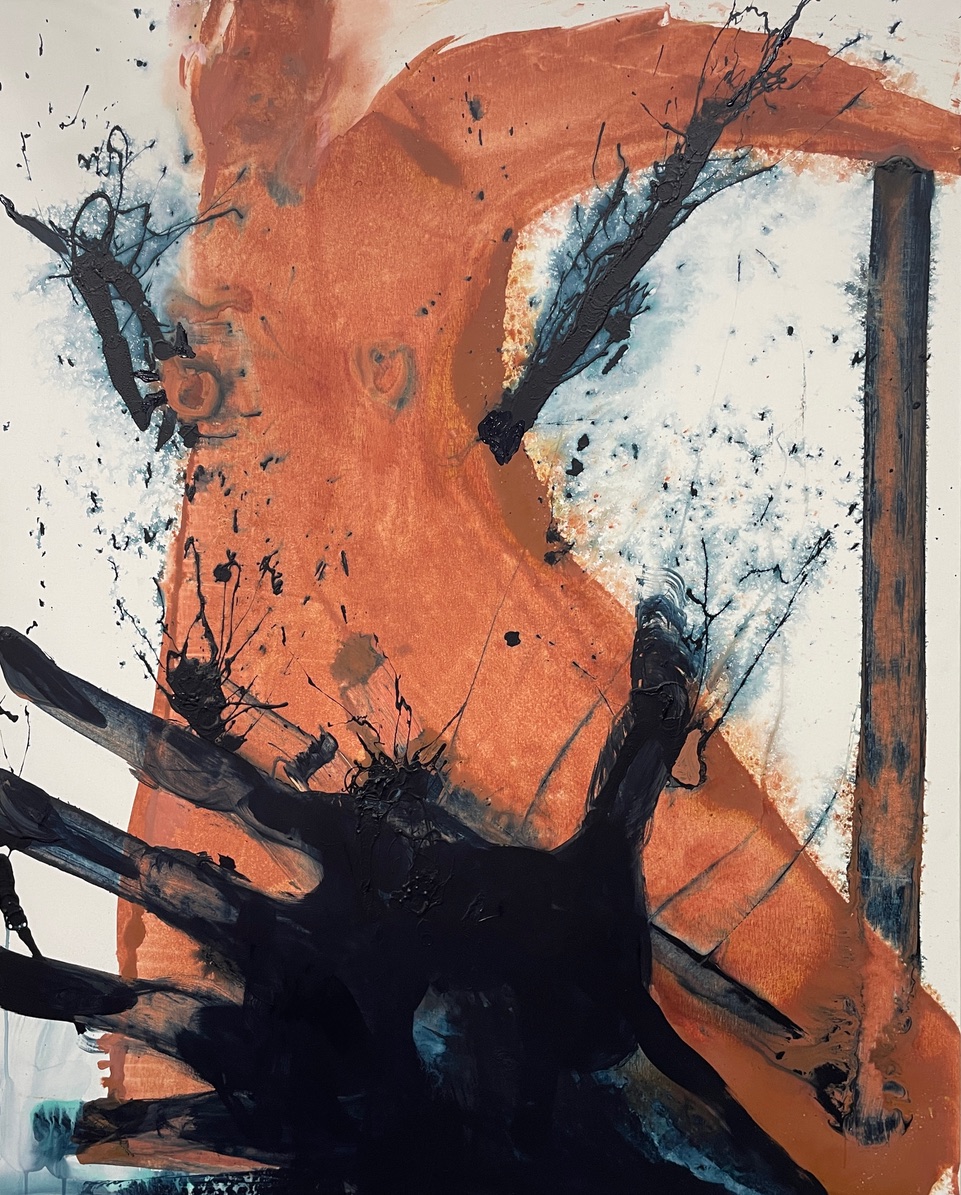
That honesty carries into her newest abstract works, were large, ambiguous forms almost animal, almost atmospheric, hover across the canvas. These are not narratives but sensations: emotional states that exist before language.
“Feelings given form,” she described them. “Emotional weight made visible.”
Taken together, Bedrick’s paintings and sculptures form an ongoing inquiry into what it means to be human, to touch and be touched, to carry and be carried, to leave marks on others that endure long after the moment has passed.
As I left her studio, those marks felt tangible. Not just in the work itself, but in the quiet intensity she brings to it. In Anne Bedrick’s world, nothing is neutral. Every gesture matters. Every absence speaks. And every hand, whether present or missing, tells a story.